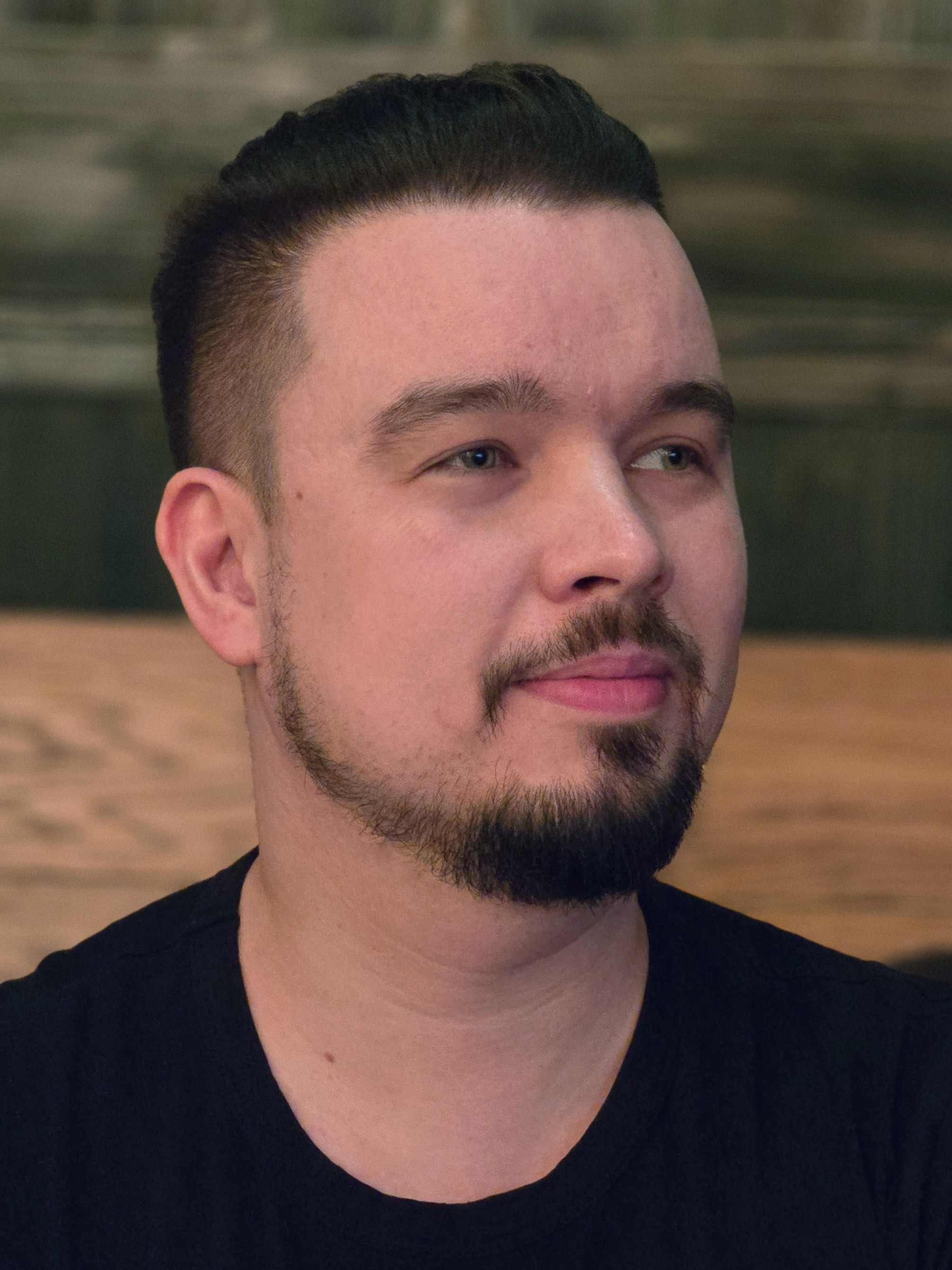
Yuriy Daybov
Engineering Leadership · Technology Transformation · AI Strategy
Building production-grade solutions at MVP speed
I focus on identifying growth bottlenecks and building both the team and the development system that deliver within real business constraints.
// profile
About
20+ years building software products and platforms, 5+ as CTO. I specialize in restructuring engineering teams and development processes, and leading technology transformations in product-focused companies. Most of the result comes down to people: rebuilding the team, retaining key engineers, carrying them through a change of technologies — without dropping commitments to the business. I understand the architecture and limitations of modern AI systems and help organizations apply them in practice.
// leadership
How I lead teams
Team first, architecture second
When building from scratch, the speed of assembling a working team matters more than the perfect technical decision. Architecture can be revised — a missed market window can't.
Restart without stopping the business
In a crisis I first lock down what can't drop under any circumstances, then rebuild around it. A team of fifty can be reassembled in six months — a lost client can't be won back.
Changing the stack is a decision about people
The main risk in a transformation isn't the stack — it's who's ready to change along with the product. I settle the new team's makeup before the transition starts, not along the way.
I grow tech leads, not bottlenecks
A strong team makes decisions without me. I bring tech leads to autonomy so delivery speed doesn't bottleneck on manual steering.
Focus over breadth
Running several teams and products at once, I prioritize hard and don't hesitate to freeze a direction temporarily. A team spread across every front sees none of them through.
“Done” is one unit for business and team
The most expensive gaps aren't in the code — they're in roles, and in business and engineers meaning different things by “done.” I reduce them to a single metric, and priorities sort themselves out.
// expertise
How speed and efficiency are achieved
SDLC Design for Product Pace
Building a development cycle that doesn't slow down product hypotheses: CI/CD, release cadence, testing strategy.
Setting up CI/CD pipelines, release cadence, and testing strategy aligned with real product needs.
Goal: shorten the path from idea to production while keeping releases stable and predictable.
Measurable targets: deployment frequency, commit-to-production time, release stability.
Teams Built for Delivery
Team structure, roles, and processes that minimize time-to-market.
Developing tech leads who make decisions autonomously without creating bottlenecks.
Balancing speed and reproducibility: a process that works without manual steering.
Team topology that enables independent releases and clear ownership.
Architecture for Speed of Change
Technical decisions that don't become a drag six months later: service boundaries, contracts, tech debt management.
Service boundaries that let teams release independently.
Managing tech debt as an investment process, not a fire drill.
Contracts between components that reduce the cost of change.
AI in the Engineering Cycle
Practical integration of AI tools into development: code review, generation, testing — with attention to risks and limitations.
Integrating AI-assisted tools into the development workflow: code review, generation, testing.
Preparing the technical and organizational environment for AI-assisted development.
Risk and limitation assessment — not everything that can be automated should be.
// writing
From Telegram


 Workslop — имитировать работу стало проще

// projects
Hands-on Engineering
I value staying in direct contact with engineering work — and with what software development actually looks like today, including AI-assisted tools.
Task Orchestrator
open-sourceA personal open-source project: a cross-platform offline task manager built with Tauri 2, React, and SQLite. Hands-on engineering — from architecture and UX to a working desktop/PWA product, using AI-assisted development, including Claude Code.

OCR Studio
open-sourceSelf-hosted document OCR service powered by PaddleOCR and NVIDIA GPU. Full-stack AI integration — Python/FastAPI backend, TypeScript frontend, Docker deployment.

// speaking
Video

MVP — is it expensive? Practical case studies
A conversation with Georgy Shatirov (CEO @ Kwikwins) about what MVP really is, how much it costs, timelines, boundaries, and hypothesis validation — with real case studies.
Internet show "Productize it!" · RuTube
Contact
Let's talk
Open to advisory, fractional CTO, and strategic technology consulting engagements.
mail Get in touch